
Backpropogation & Effect Adjustments
How effects are back-propogated to get the indirect effect and the true total effects
Before we start the back-propogation process, we have already successfully completed these two :
- FCI based Causal Discovery based on the Causal Graph
- Ridge Regression based Direct & Nested Direct effect estimation (A detailed view of this approach can be seen here )
Effect Adjustments - Getting to Indirect & Total Effects from Direct Effects
To explain how the adjustment of contributions happens, let us take a simple example and go through the various stages
Stage 1 - We start with a DAG, backed by domain knowledge. Let us assume that the DAG looks like this :
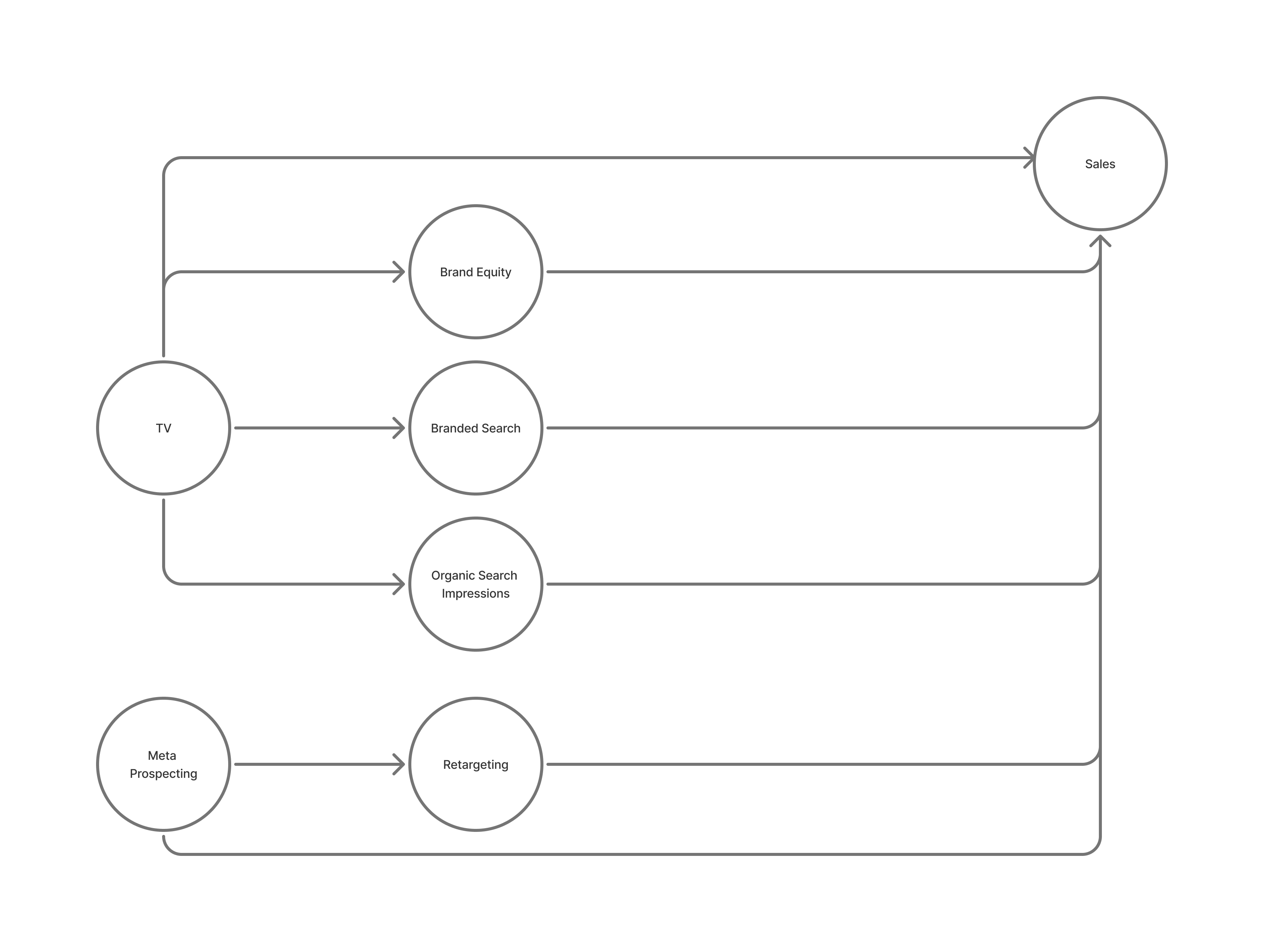
Stage 2 - Apply Causal Discovery on this and we get to know the strength of these relationships
[Refer this page to know about the algorithm ]
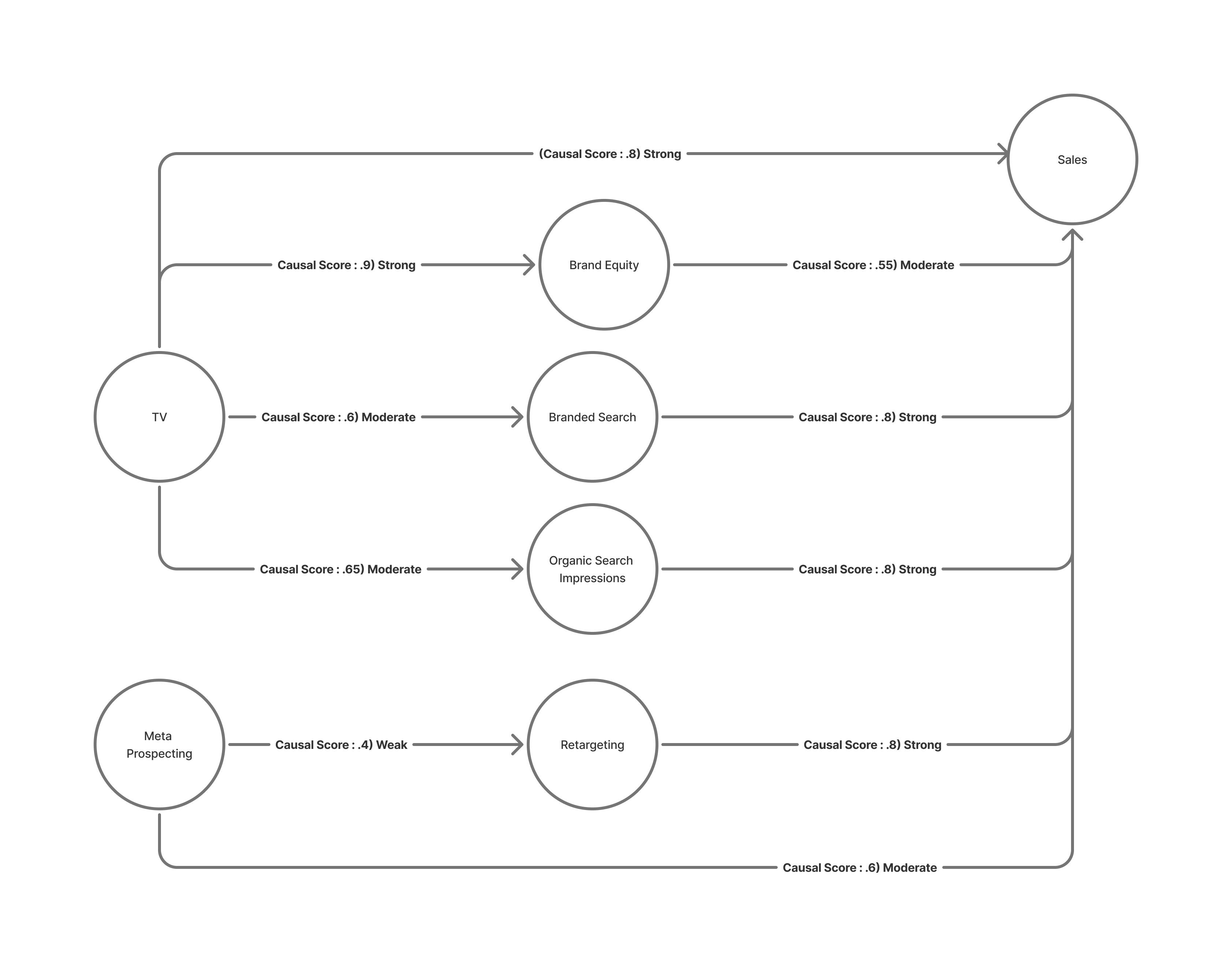
Step 3 - Get the direct effect and contribution from the ML based process based on ridge regression
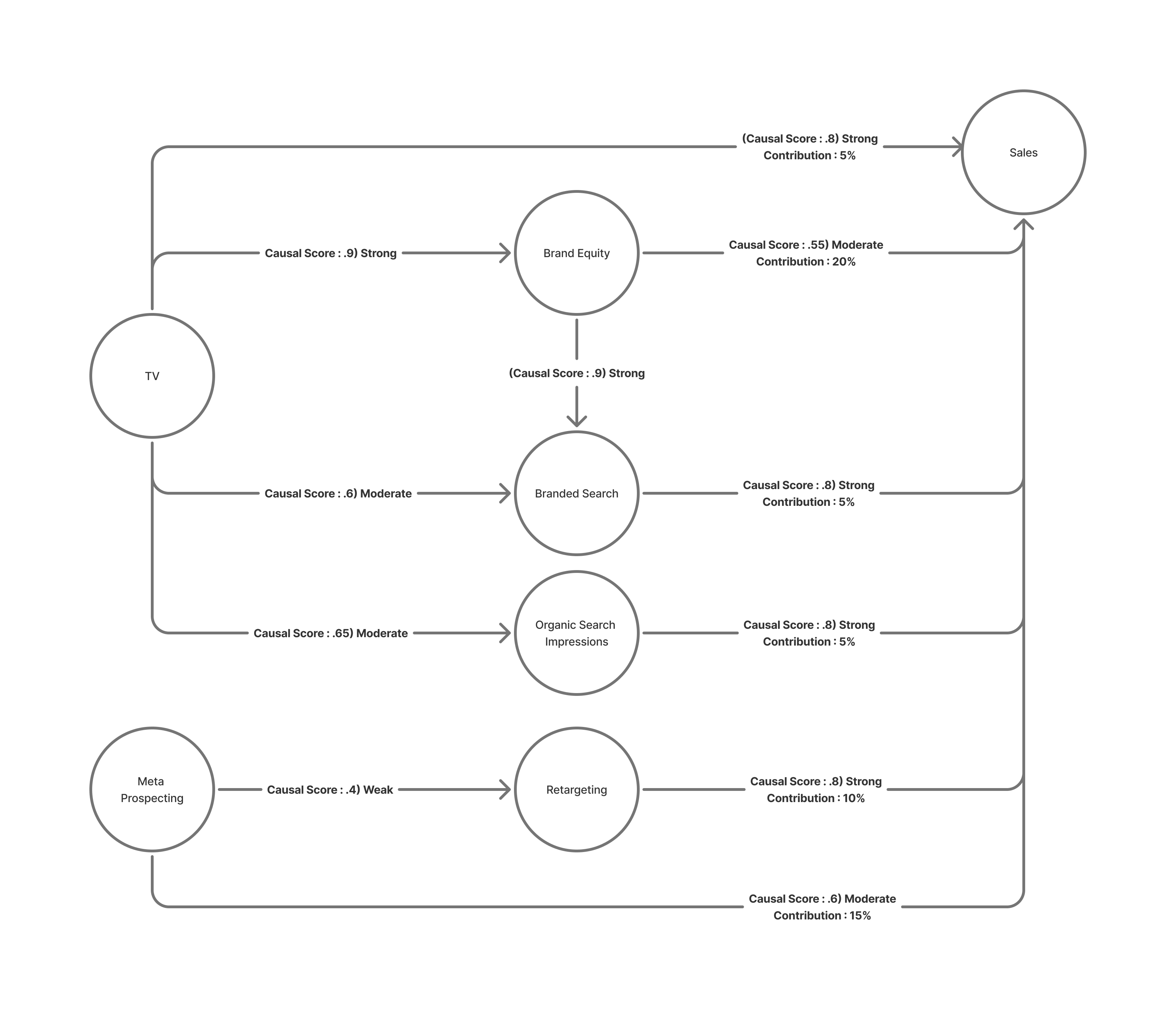
Step 4 - Run separate ridge regression approaches to explain the change in mediator variables as a function of its drivers
This gives us the nested direct contribution of "Drivers" to "Mediators"
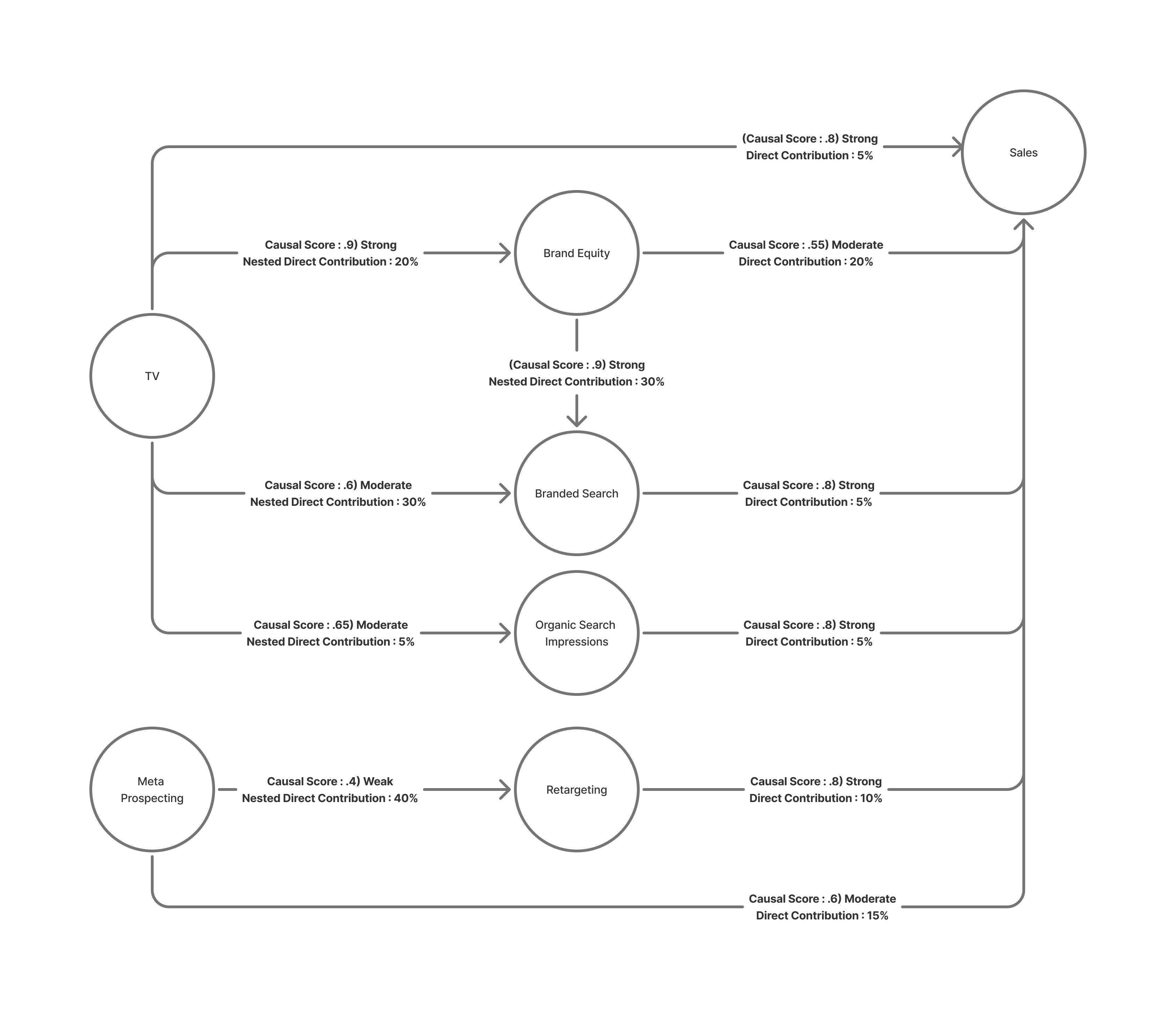
The True Contribution with Back-propagation
True contribution is the sum of Direct & Indirect Contributions, also know as the Total Effect.
- For Drivers, Total Effect = Direct Effect + Indirect Effects
- For Mediator variables, Total Effect = Direct Effect - (Sum of Indirect Effects through them)
This way we penalise the mediator and distribute the Effect (which is the incremental contribution) to the true causal drivers
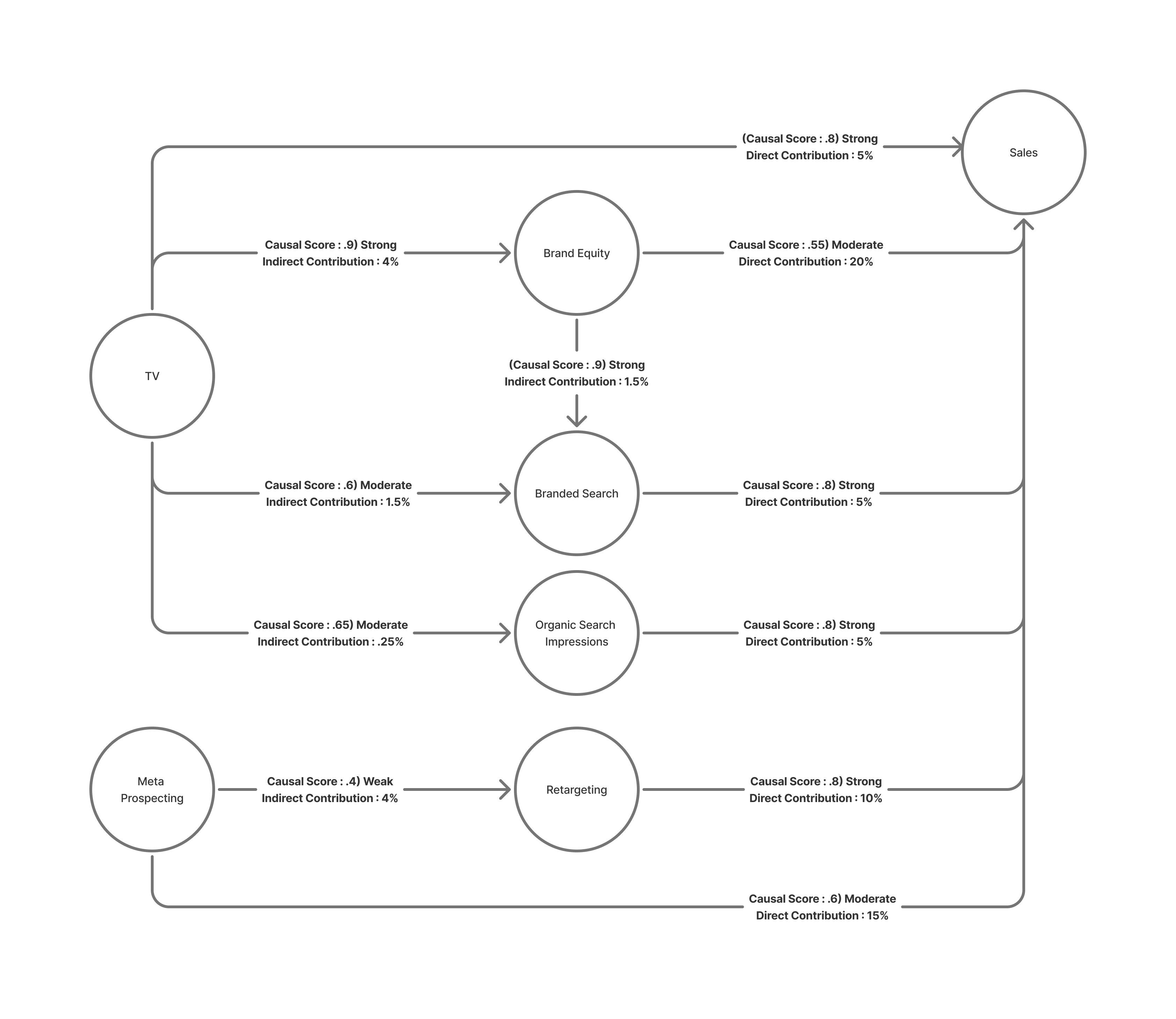
Example
| Variable | Direct Effect on Sales | Indirect Effect (from DAG) | Total Effect |
|---|---|---|---|
| TV | 5% | 5.75% | 10.75% |
| Brand Equity | 20% | 1.5% - (4%) | 17.5% |
| Branded Search | 5% | -(1.5%+.25%) | 3.25% |
| Organic Search Impressions | 5% | -.25% | 4.75% |
| Retargeting | 10% | 4% | 6% |
| Meta Prospecting | 15% | 4% | 19% |
Next let us understand the core ML algorithm that powers this inference. It is detailed here
Updated 9 months ago