
What are segments?
Create and manage audience segments and lists.
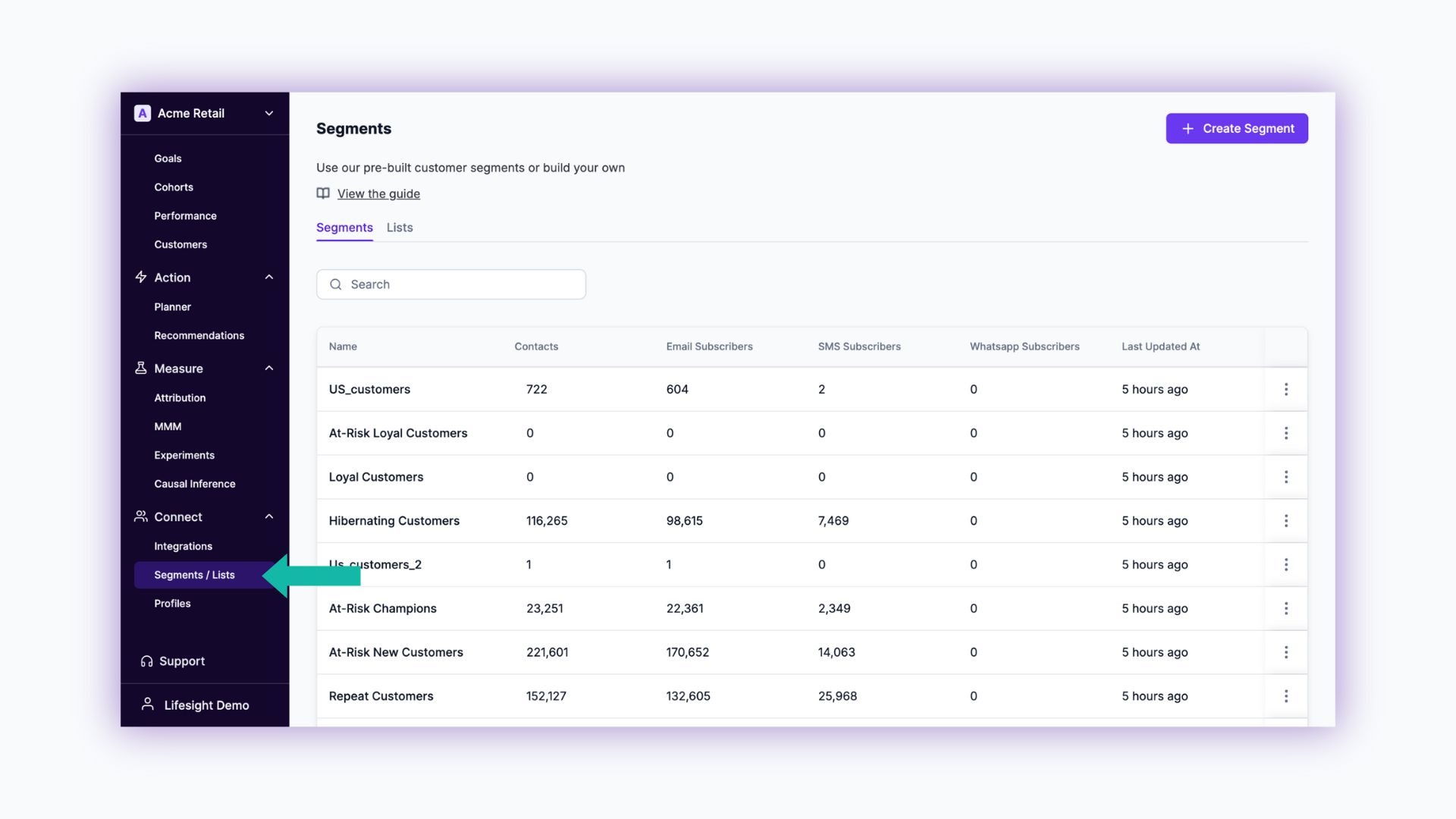
What are Segments?
Segments are simply contacts grouped by defining a set of conditions based on their behavior or identity. While lists are static, meaning they grow when people subscribe to the list or when you add contacts to the list. Segments grow dynamically as people fulfill a set of conditions or shrink as people do not meet the conditions.
What are Lists?
A list is a curated collection of contacts who share a specific attribute or have been intentionally grouped. Lists are static and only expand when people subscribe or are manually added.
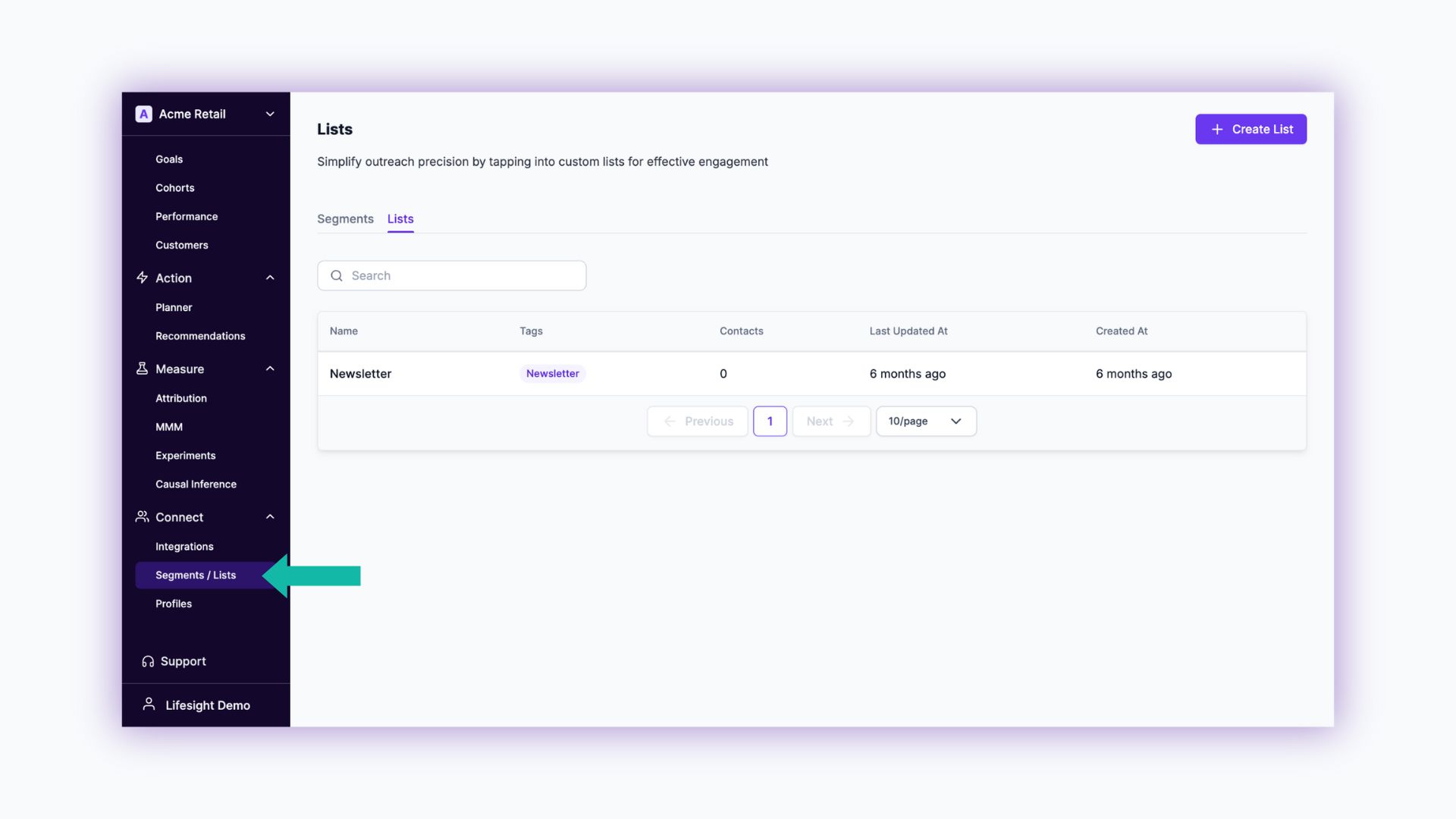
Lists allow you to categorize contacts based on the types of messages they're interested in, such as newsletters, announcements, or alerts. This makes lists an invaluable asset in marketing for targeted messaging and campaigns.
Segments are an essential tool in marketing automation that can be used for a variety of purposes, including:
- A/B Testing: Ideal for segmenting groups to test different messaging or offers, lists help marketers identify what resonates most effectively with their target audience.
- Personalization: Lists enable the tailoring of messages by categorizing contacts according to preferences, purchase history, or content engagement.
- Event Promotion: Lists can be used to promote events or webinars to a specific group of contacts who have shown interest in similar topics or events in the past.
Difference between Segments and Lists
Segments don’t require any opt-in criteria in order for somebody to be added. Segments pull data from every contact in your account to create an actionable audience that is at the same customer journey stage.
On Lifesight, you can create user segments based on behavior and traits that and send them as custom audiences to you ad channels. These segments also serve as a set of conditions that trigger, personalized marketing campaign and automations.
Updated over 1 year ago