
How to compare scenarios in plans
At Lifesight we can compare different scenarios under one plan itself.
Different constraints can be used to create different scenarios. Types of constraint available is Current, Conservative, Moderate , Aggressive , and Manual. Initial Budget for different constraints is calculated on business understanding which acts as a reference point for the budget optimizer and optimizes the spends for further forecasting calculations.

Comparing Scenarios Through Constraint Selection
In marketing budget optimization, different constraint types can be applied to forecast future outcomes. These constraints define the permissible range of budget adjustments that can be recommended by the optimizer. Below is an overview of the various constraint types and how they influence forecasting and recommendations:
Current Constraint
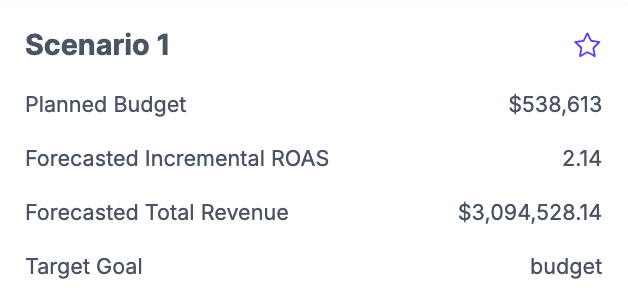
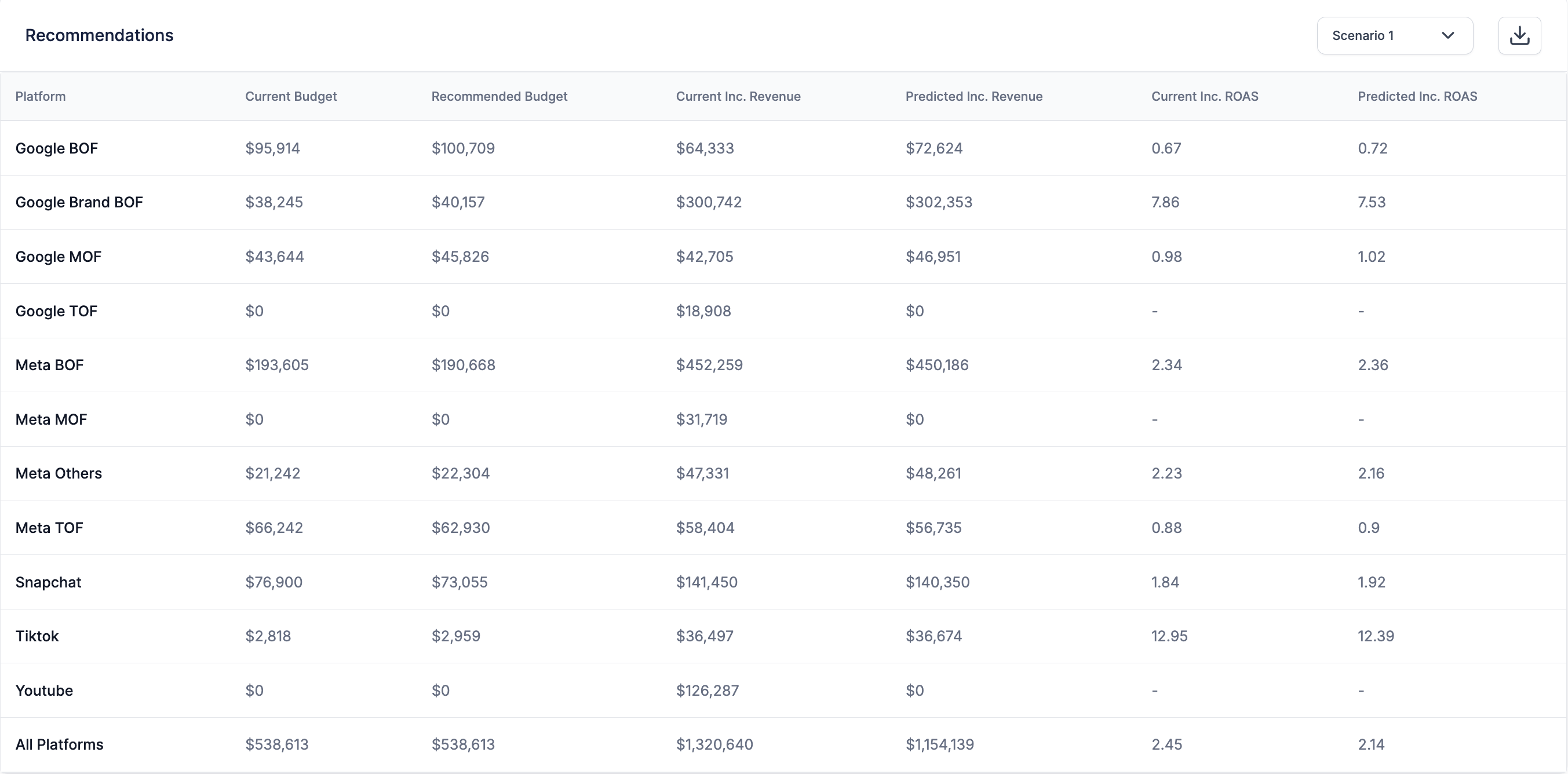
The Current Constraint utilizes the same ad channel spends as the base period selected for forecasting future periods. For instance, if July 24 is used as the base period to forecast for August 24, the July spends will serve as the initial budget reference. The optimizer can only recommend budget changes within a range of 95% to 105% of the initial spend.
Conservative Constraint
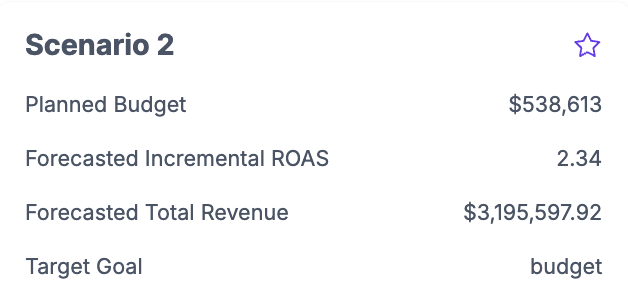
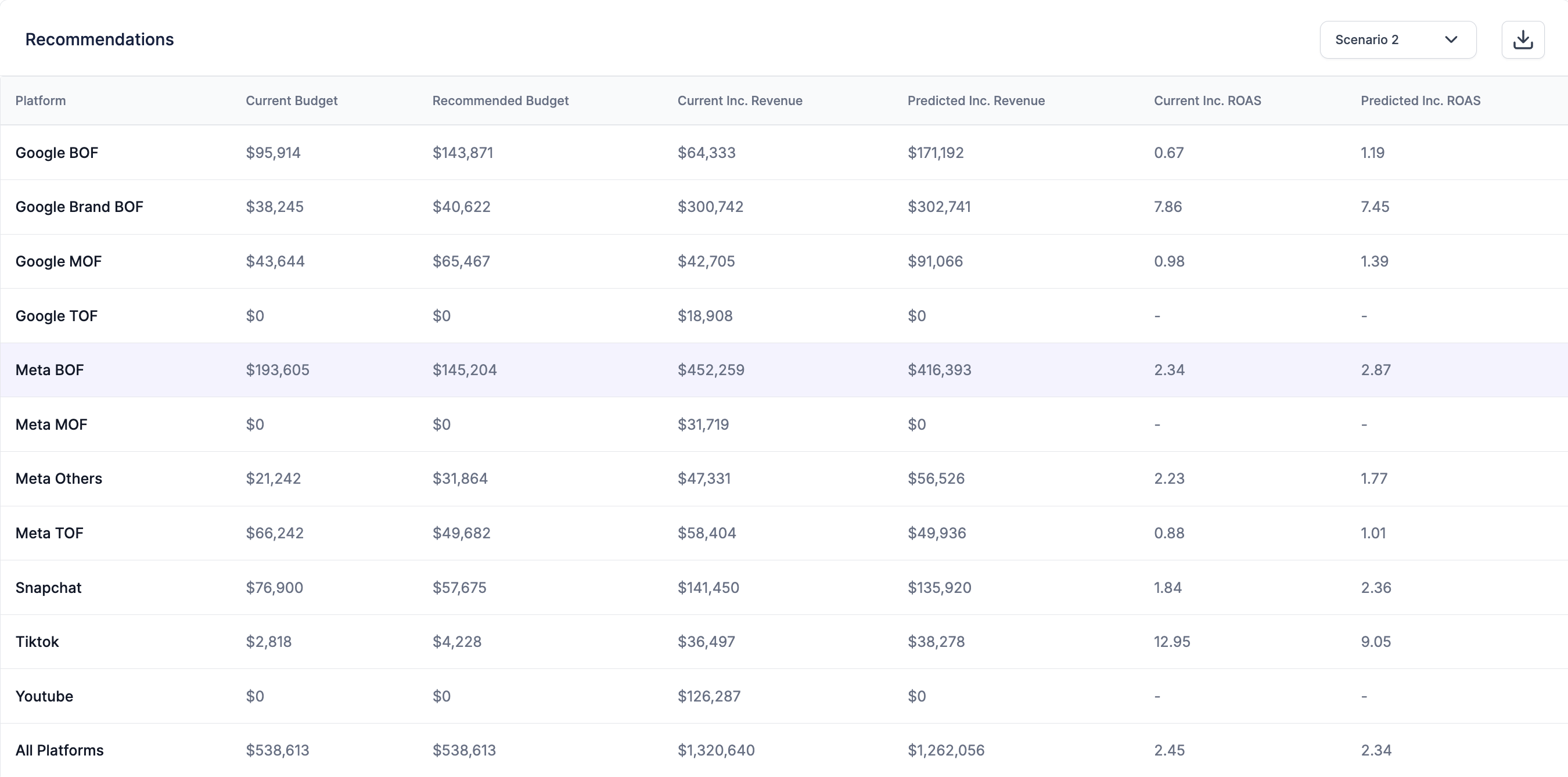
The Conservative Constraint operates similarly to the Current Constraint but with a tighter range. The recommended budget adjustments are constrained to within 75% to 100% of the current spend, allowing for more cautious spending variations.
Moderate Constraint
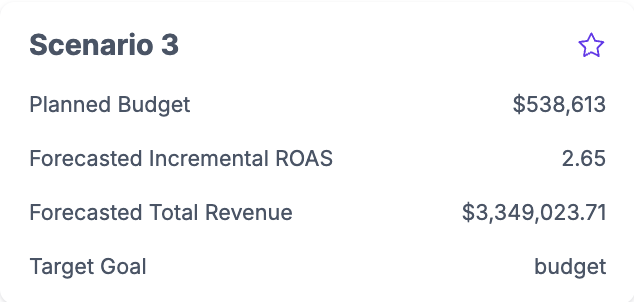
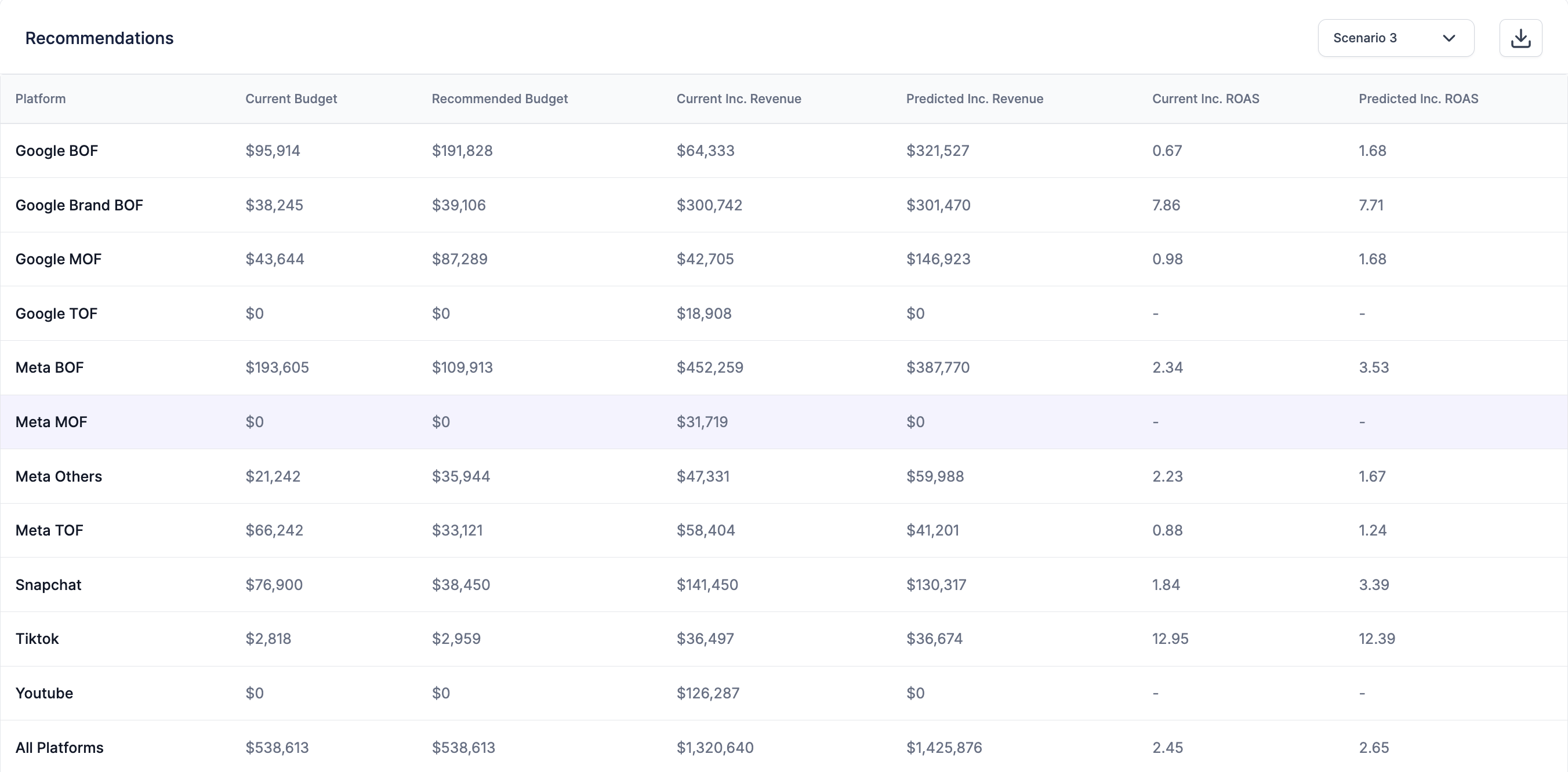
The Moderate Constraint allows for a broader range of spending adjustments, with recommendations varying between 50% to 200% of the current spend. This provides a balance between conservative and aggressive spending strategies.
Aggressive Constraint
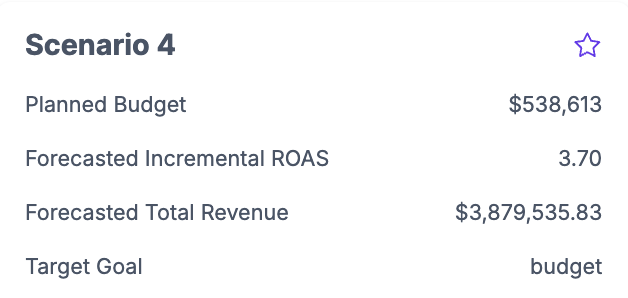
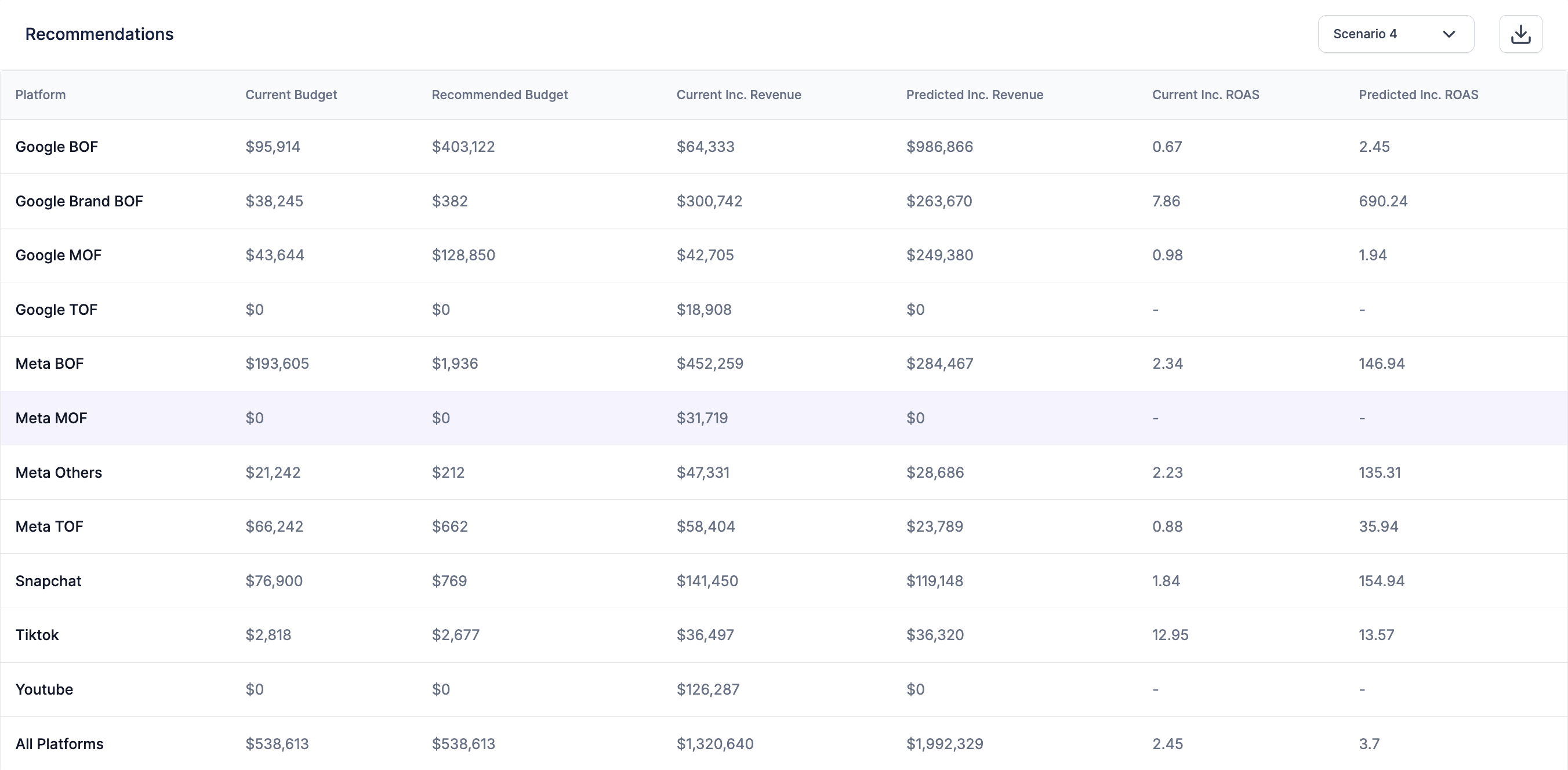
The Aggressive Constraint permits the widest range of adjustments, with spending recommendations ranging from 1% to 499% of the current spend. This constraint is suitable for scenarios where significant changes in budget allocation are considered.
Manual Constraint
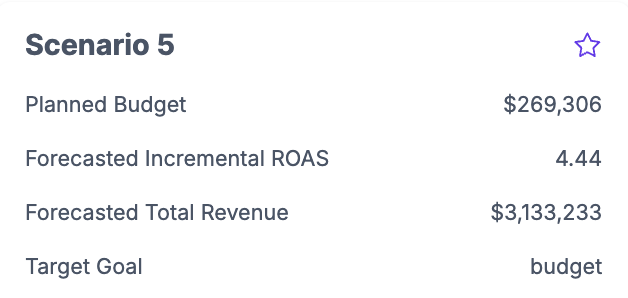
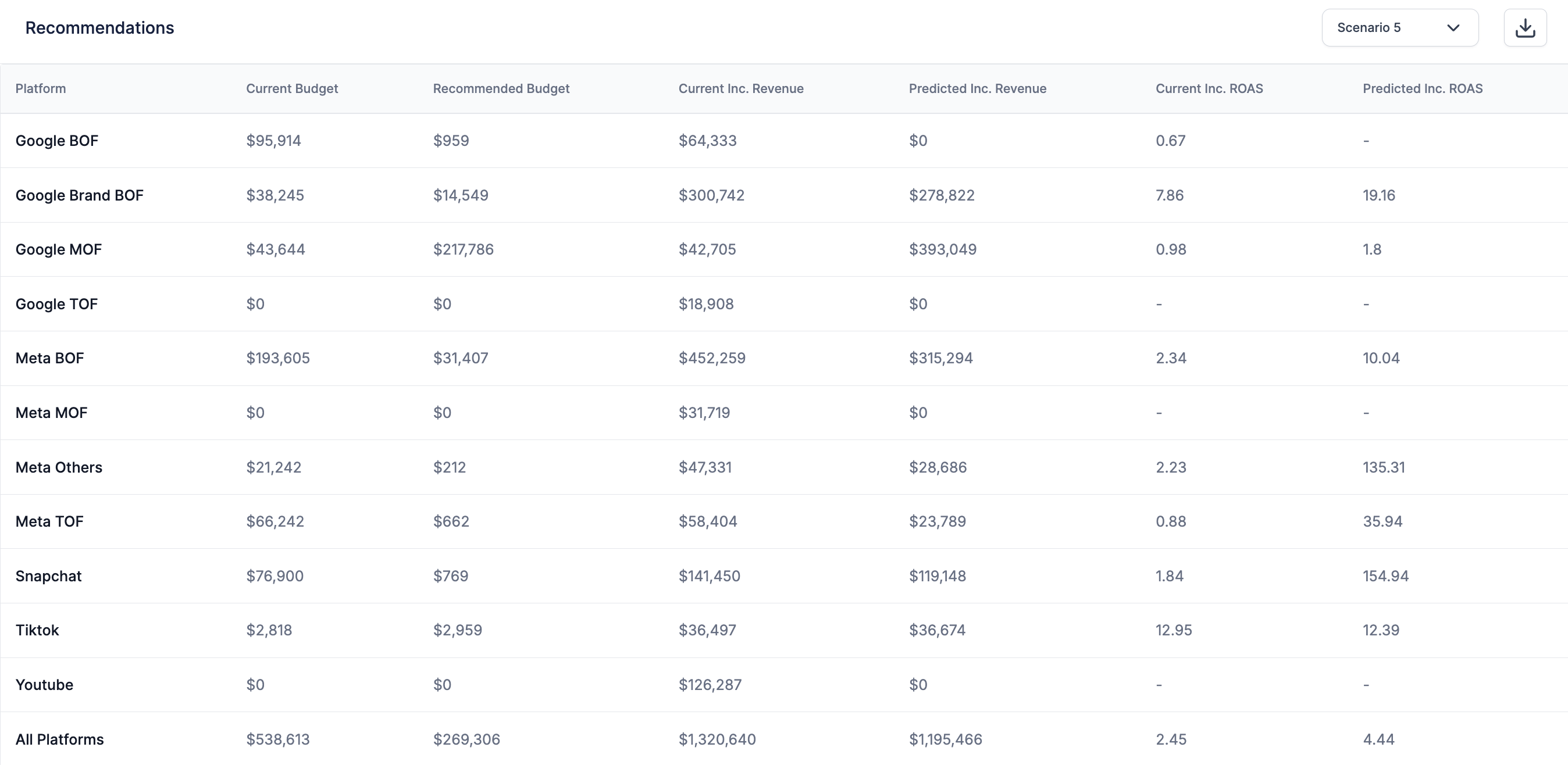
The Manual Constraint provides full control over budget allocation. Users can manually allocate planned spends for various channels or tactics, which the budget optimizer then uses as the baseline for forecasting and recommendations.
Scenario Comparison on the Platform
To evaluate the impact of various constraints within a single plan, we use July 24 as the base period and forecast outcomes for August 24 under the Current, Conservative, Moderate, Aggressive, and Manual constraints. Additionally, users have the flexibility to input their own planned spend if they know what is the overall spend they will be using in that forecasted period.
- The forecasted revenue and recommendations using the Current Constraint are as follows for Scenario 1:
Recommendations:
- Scenario 2: The forecasted revenue and recommendations using conservative constraints for same:
Recommendations:
- Scenario 3: The forecasted revenue and recommendations using Moderate constraint for the same:
Recommendations:
- Scenario 4: The forecasted revenue and recommendations using Aggressive for same:
Recommendations:
- Scenario 5: The forecasted revenue and recommendations using Manual constraint and using planned spend as $269,306:
Recommendations:
Conclusion
Effective marketing budget optimization hinges on selecting the appropriate constraints to forecast and plan future spending. By leveraging Lifesight’s platform, users can explore a variety of scenarios under different constraint types—Current, Conservative, Moderate, Aggressive, and Manual—each offering a unique approach to budget adjustments and forecasting accuracy. The flexibility to manually input planned spend further enhances the customization of these forecasts, allowing users to tailor predictions to their specific business needs.
Comparing these scenarios within a single plan provides valuable insights into how different budget strategies may impact future revenue, enabling businesses to make informed decisions that align with their financial goals and market conditions. Ultimately, this comprehensive approach empowers users to optimize their marketing budgets effectively and achieve their desired outcomes.
Updated over 1 year ago